
Secret Bunkers (2020)
2.57 GB2 filesFilmWar
2 tracked .torrent files — each is announced and scraped on its own.
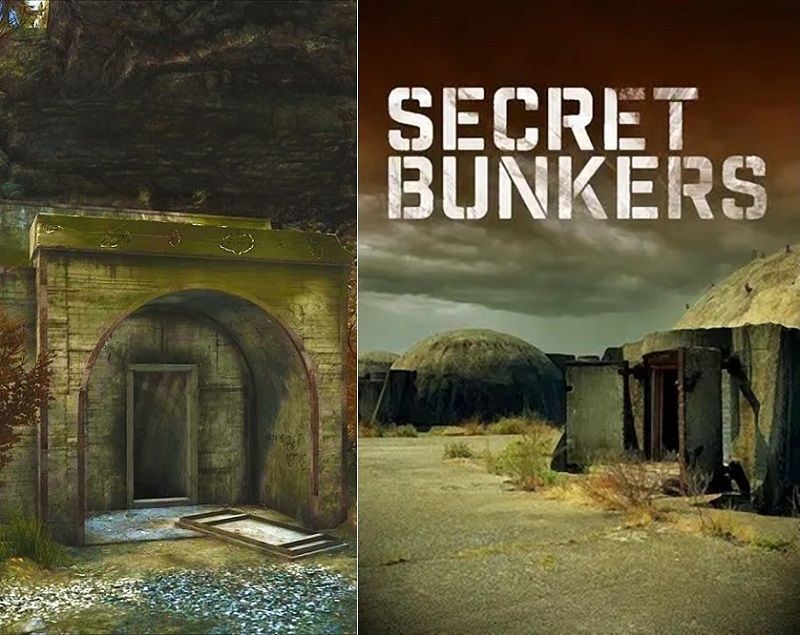
Bunkers can be found in many regions of Europe. They reflect the technical know-how and the security threats of their era. "ZDFinfo" presents bunker complexes from various historical periods.
Bunkers remain a relevant topic today. Hundreds of thousands of these protective structures—almost exclusively made of reinforced concrete—still exist across Europe. The largest concentration is in Albania, which is home to an estimated 200,000 small-scale bunkers, alongside a massive government bunker built for the country's former leaders.
In the 19th Century, huge stone fortresses protected leaders and their people against enemy canons. As weapons technology and warfare changed, countries began to build steel and concrete bunkers, to protect their troops in battle.
By the early 20th century, these had evolved into concealed defensive structures made of steel and concrete. Secret bunkers—the military's promise of invincibility during the two world wars—stood as martial, indestructible strongholds.
Adolf Hitler and Enver Hoxha: The Masters of the Bunkers ; the first episode examines the bunkers built in Europe before and during World War II. In the second episode, we go underground in the nuclear-era shelters, including the thousands built by a paranoid Albanian leader.
From the Fortezza (Franzensfeste) fortress in Italy and Churchill's War Rooms in London to the East German National People's Army (NVA) communications center in Strausberg, these military defensive structures are far more than mere technical installations. In two innovative episodes, we track down eight of these secret bunkers, examine their unique architectural features, and recount their history.
E01: Concrete Against Bombs
Episode 1 presents four installations from the mid-19th century up until the middle of World War II. Such as the legendary fortress of emperor Francis I of Austria in today's Northern Italy which was never put to the test. In the 1930s, the so-called East Wall was intended to shield Germany's border against a suspected invasion from its Polish neighbor. However, when the Soviet Army advanced to Berlin in early 1945, its bunkers proved worthless. From 1940 onwards, Britain's Prime Minister Winston Churchill coordinated the war from a bomb-proof shelter right in the heart of London. Along the French Atlantic Coast, colossal blocks of steel concrete were erected to provide shelter for the German U-Boats until, finally, they had to give themselves up.
E02: Facing Nuclear Annihilation
The end of the Second World War marked a turning point in the history of bunker construction. Future military conflicts would be defined by the advent of nuclear weapons, making fortified, hermetically sealed shelters more critical than ever. Beyond protecting personnel, these structures were now required to safeguard weaponry—specifically, medium-range and intercontinental ballistic missiles tipped with nuclear warheads. Once subject to the strictest levels of secrecy, many of these sites remain shrouded in mystery, having largely faded from public memory. Some have since fallen into ruin, serving today as somber monuments to the Cold War. Episode 2 presents typical shelters of the nuclear age such as Soviet missile bases in today's Lithuania, a bunker of West Germany's Civil Protection Service and the nuclear-proof communication center of the East German Army. The episode is rounded off by an astonishing look at Albania. The tiny country is still the site of the largest number of bunkers worldwide, the result of its dictator's paranoia.
Tech Specs:
Video Codec: x264 CABAC High@L4
Video Bitrate: 3 255 kb/s
Video Resolution: 1920x1080
Display Aspect Ratio: 16:9
Frames Per Second: 23.976 fps
Audio Codec: AAC (LC)
Audio Bitrate: 128 kb/s VBR 44.1 kHz
Audio Streams: 2
Audio Languages: english
RunTime Per Part: 54 min
Number Of Parts: 2
Part Size: 1.28 GB
Source: WEB DL
Encoded by: DocFreak08 @ MVGroup
Comments
Sign in to comment.
No comments yet.